
Sneakers are one of the most purchased items in fashion, and one of the hardest to dispose of responsibly. The average pair takes 30 to 40 years to decompose in a landfill, is made from up to 65 different materials, and is rarely accepted by recycling programmes. That’s before you factor in the adhesives, synthetic dyes, and rubber compounds involved in production.
Which makes the question of sustainable sneakers really complicated. It’s not as simple as switching to a brand with a green logo. But it’s also more actionable than most people realize, if you know what to look for.
Why Most Sneakers Aren’t Sustainable
The honest answer: no sneaker is fully sustainable. Every pair requires materials, energy, and transport to produce. The more useful question is what separates a more responsible option from a less responsible one.
Three factors matter most: what the shoe is made from, how it’s made, and how long it lasts. A well-constructed pair of ethical shoes worn for five years has a fraction of the environmental footprint of two cheaper pairs replaced every 18 months. Longevity is the variable most people underestimate when they’re shopping for new shoes.
The rest, materials, certifications, production transparency, matters too. But it all compounds from that base.
Sustainable Materials in Footwear
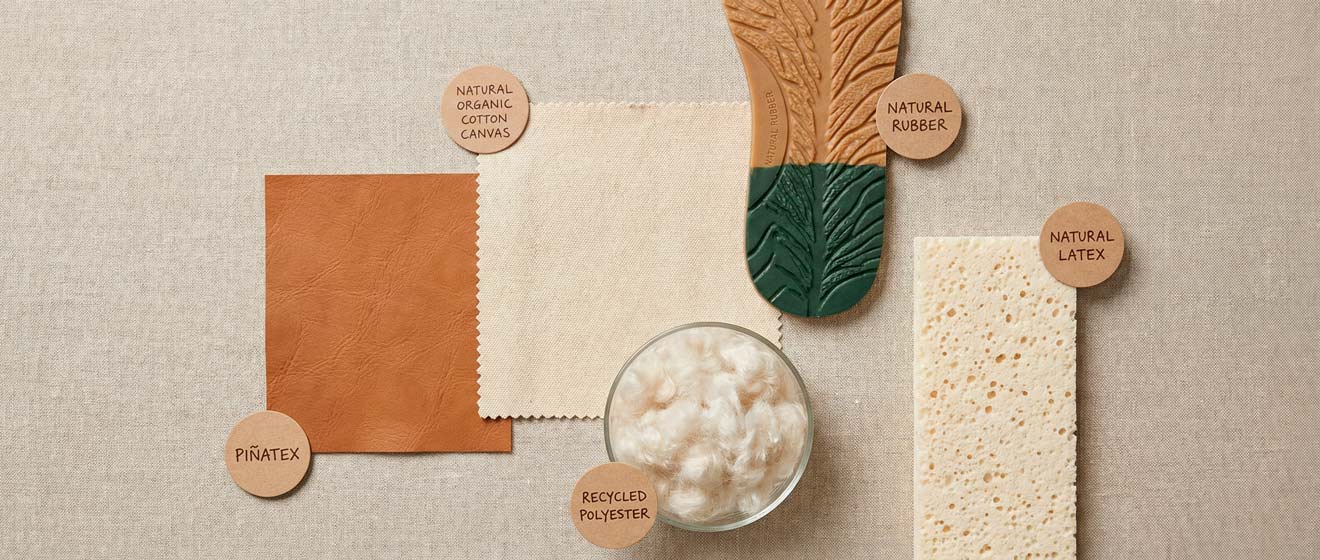
This is where things get specific. Here’s what’s worth knowing about the materials showing up in eco-friendly sneakers right now:
Organic Cotton Canvas
Regular cotton has a surprisingly bad reputation for a natural fibre. It accounts for more than 25% of the world’s pesticide use despite covering only about 3% of farmland, so “it’s cotton, it must be natural” doesn’t really hold up. Organic cotton skips the synthetic pesticides and fertilisers, breaks down at end of life, and is one of the easier sustainable claims to actually verify. GOTS certification means someone other than the brand checked.
Recycled Rubber Soles
Two versions worth knowing: natural rubber tapped from Hevea trees (renewable, biodegradable) and recycled rubber made from industrial or post-consumer waste. Either beats virgin synthetic rubber, which comes from petroleum. The foam you’ll see in most athletic soles, EVA, is petroleum-based and sits in landfill essentially forever. Natural latex breaks down. That gap matters more than most shoe marketing suggests.
Recycled Polyester and Nylon
This is usually made from old plastic bottles, and the environmental math is real – recycled polyester has a carbon footprint roughly 75% lower than the virgin version. But it still sheds microplastics every time it goes through a wash, and it won’t biodegrade. So: genuinely better, not problem-solved.
Plant-Based Leather Alternatives
Piñatex (pineapple leaf fibre), Mylo (mushroom), apple leather – these exist partly because of animal welfare concerns, but also because conventional leather tanning is messier than it looks. Chrome tanning (the dominant method worldwide) produces wastewater laced with chromium, and the finished leather doesn’t break down at end of life.
Plant-based alternatives vary a lot in durability and how much better they actually are. Piñatex has the longest track record. Mushroom-based materials like Mylo ran into serious scaling problems in 2025, a few major producers stepped back when commercial production turned out to be harder than expected. Worth a second look before assuming any plant-based label is automatically the right call.
Natural Latex
Shows up in midsoles and insoles as an alternative to synthetic foam. Renewable, biodegradable, and genuinely different from the EVA it often replaces. FSC certification on natural rubber is a basic signal that the sourcing was at least monitored. Not a guarantee, but better than nothing.
“The footwear industry accounts for approximately 1.4% of global greenhouse gas emissions annually – a figure that could be significantly reduced through material substitution and extended product life.”
– Sustainable Apparel Coalition, Higg Materials Sustainability Index, 2025
Certifications to Look For
Not all certification logos on shoe boxes mean the same thing. These are the ones worth recognising:
B Corp – covers the whole company, not just the product. A brand can be B Corp certified and still use conventional materials. What it signals is that the business operates with verified social and environmental accountability.
OEKO-TEX Standard 100 – confirms the textile components have been tested for harmful substances. Relevant for fabric uppers, linings, and laces. Doesn’t cover rubber soles or adhesives.
Bluesign – focuses on chemical and resource efficiency in textile manufacturing. More specific to the production process than the finished product.
Fair Trade – addresses labour conditions in the supply chain. Worth looking for, especially for brands manufacturing in South or Southeast Asia.
A note on vegan claims: “vegan” is not a sustainability certification. It means no animal products were used, which is meaningful for animal welfare but says nothing about the environmental impact of the synthetic materials used instead.
Vegan vs Leather: Environmental Impact
This one is complicated, and anyone telling you there’s a clean answer probably has an agenda.
Conventional animal leather has a high environmental cost: cattle farming contributes to deforestation and methane emissions, and chrome tanning is one of the most polluting industrial processes in fashion. That’s well documented.
But conventional vegan sneakers are often made from PVC or PU – both petroleum-derived plastics that don’t biodegrade and can’t be recycled. A vegan sneaker made from virgin PU is not automatically the more sustainable choice.
The better comparison is: well-sourced leather (vegetable-tanned, from certified tanneries) versus next-generation plant-based materials (Piñatex, Mylo). Both are preferable to their conventional counterparts. Both are harder to find and more expensive.
For most people shopping for vegan shoes in Canada right now, the practical answer is: look for recycled synthetics over virgin ones and prioritise durability over material purity.
Shopping for Vegan Shoes in Canada – What to Look For
Before buying any new pair, run through this:
- Can you find the brand’s supply chain information on their website? Named factories, not just “ethically made.”
- Is there a third-party certification, not a self-declared eco claim?
- What’s the sole made from? This is often the least sustainable component and the least disclosed.
- Does the brand have a repair programme or take-back scheme?
- Are you buying because you need new shoes, or because you want them?
That last question isn’t a guilt trip. It’s the most useful sustainability question in fashion, and it applies to sneakers more than almost any other category because the market is so driven by newness and release cycles.
If the answer is want, secondhand is a better default for sneakers than almost any other clothing category – they’re durable, easy to evaluate for condition, and widely available on resale platforms across Canada.
It’s a conclusion a lot of people arrive at on their own:

“You can’t get ethically made anything cheap. Either look for secondhand or choose between ethical and affordable. If you can’t get ethically made, get something that will last.”
– r/SustainableFashion
Making Eco-Friendly Sneakers Last: Care Tips That Work
The single most effective sustainable choice is extending the life of what you already own. For sneakers specifically:
- Rotate pairs rather than wearing one daily. Compression in the midsole is the main thing that degrades sneakers structurally, and rotation gives foam time to decompress.
- Clean regularly with mild soap and a soft brush rather than machine washing, which breaks down glues and upper materials faster.
- Replace laces and insoles before deciding a pair is worn out. These are the first things to go and the cheapest to replace.
- Use a cobbler for resoling leather and rubber-soled shoes. In most Canadian cities, this service is available and costs a fraction of a new pair.
- Store away from direct sunlight and heat, which yellows rubber and degrades synthetics over time.
FAQs
Are sustainable sneakers available in Canada with reasonable shipping?
More than before. The domestic market for eco-friendly sneakers has grown since 2022, and several brands with Canadian distribution now offer free shipping thresholds comparable to conventional retailers. Duties are still a consideration for European brands shipping direct.
Is it worth paying more for sustainable sneakers?
Depends on what you’re comparing. A $200 pair you wear for four years costs $50/year. A $90 pair you replace twice in the same period costs $45/year, but produced twice the waste and twice the manufacturing impact. The maths usually works out, but it requires buying things you’ll keep.
What should I do with old sneakers I can’t repair?
Some municipalities in Canada accept textiles (including footwear) at drop-off depots for industrial recycling. Check your local waste management site. A few brand-run take-back programmes also accept any brand’s shoes, not just their own. Neither option is perfect, but both are better than landfill.
How do I know if a “vegan sneaker” claim is actually meaningful?
Ask what the upper is made from. If it’s PU or PVC without any recycled content, the claim is accurate but the environmental benefit is minimal. Look for disclosed materials, not just the vegan label.
The most sustainable sneaker decision is usually the one you’ve already made: extending the life of what you own. When it’s genuinely time for a new pair, the questions above are your starting point, not the logo on the box or the colour of the brand’s website.

For sizing help when shopping from European or international brands, our shoe size conversion page covers EU, UK, and US to Canadian conversions.