
Clothing gets most of the attention in sustainable fashion conversations, but accessories are where a lot of the ethical complexity lives. The jewelry industry has a mining problem. The leather industry has a tanning problem. Fast fashion hats are made from synthetic materials that shed microplastics and end up in landfills after one season. We looked at what actually makes accessories sustainable, across jewelry, bags, hats, and everything in between, and put it together in one place.
Sustainability in Accessories: Where to Start
The same principles apply here as in the rest of sustainable fashion, but with some category-specific wrinkles worth knowing.
Materials are the starting point. Natural, renewable, or recycled materials are generally preferable to virgin synthetics. But “natural” doesn’t automatically mean sustainable – conventional cotton accounts for a disproportionate share of global pesticide use relative to the land it covers.
Production conditions matter just as much. Fair wages, safe working environments, and transparent supply chains are part of the picture that certifications help verify.
Durability is sustainability in practice. An accessory you wear for ten years is more sustainable than a “sustainable” one you replace every two, regardless of what it’s made from.
Certifications to look for:
Certification | What it covers |
|---|---|
OEKO-TEX Standard 100 | Tests every component for 1,000+ harmful substances |
GOTS | Organic fibres + full supply chain transparency |
Fair Trade | Fair wages and working conditions |
Fairmined | Responsibly sourced gold from small-scale mines |
RJC (Responsible Jewellery Council) | Ethical sourcing audits for jewelry |
GRS (Global Recycled Standard) | Verifies recycled material claims |
Hats and Berets: Which Materials Are Eco-Friendly?
Hats and berets are one of the highest-volume accessory searches in Canada: functional, visible, and replaced often. Most mass-market hats are made from acrylic, a petroleum-based synthetic that sheds microplastics and doesn’t biodegrade. If you’re specifically looking for eco-friendly hats, the material is the first thing to check. The natural alternatives include:
- Wool – temperature-regulating, naturally water-resistant, biodegradable. A well-made wool beret will outlast several acrylic ones without any special treatment.
- Organic cotton – works well for casual caps and unstructured styles. GOTS certification confirms the standard holds through production, not just at the farm level.
- Hemp – grows fast, resists pests without pesticides, produces a durable lightweight textile. One of the most genuinely low-impact plant fibres available.
- Raffia – harvested from palm leaves, dried without chemical processing. A renewable resource with minimal environmental impact and no synthetic inputs.
- Recycled materials – some manufacturers now use fabric made from recycled plastic bottles. Lightweight, waterproof, and quick-drying. Not biodegradable, but keeps existing plastic in use rather than adding new synthetic fibre to the cycle.
The Basics of Ethical Jewelry for Canadian Shoppers
Conventional jewelry production is one of the more ethically fraught parts of the fashion industry. Traditional metal and gemstone mining has historically funded armed conflicts, involved unsafe labour conditions, and caused significant environmental damage, including water pollution and soil degradation.
Ethical jewelry works around this through material substitution and sourcing transparency. The main materials to look for:
- Recycled metals – gold, silver, and platinum can all be reclaimed and refined to identical quality without new mining.
- Fairmined gold – certified to come from responsible small-scale mines meeting strict social and environmental criteria.
- Lab-grown diamonds and gemstones – chemically and visually identical to mined stones, produced with a significantly smaller carbon footprint and none of the conflict sourcing concerns.
- Conflict-free stones – verified through the Kimberley Process or suppliers with traceable supply chains.
- Recycled or reclaimed gemstones – vintage or repurposed gems that give existing resources a second life.

Some of the most enduring jewelry choices, hoop earrings, pearl pieces, simple chains, translate naturally into sustainable versions. Recycled sterling silver or gold hoops are widely available and functionally identical to newly mined equivalents. Pearl jewelry made with freshwater pearls and recycled metal settings is a lower-impact alternative to pieces with mined gemstones.
When shopping, look for RJC certification or membership, Fairmined certification for gold, and explicit disclosure of where metals and stones are sourced. Transparency about whether recycled or newly mined materials are used is the clearest signal of a brand’s actual commitment.
Vegan Leather Alternatives
Vegan leather is not a single material. It’s a category that covers everything from petroleum-based plastics to plant-derived biocomposites, and the sustainability differences between them are significant.
The most honest summary of where the field currently stands comes from one manufacturer who makes plant-based leather: “the addition of a plastic plays a pivotal role in the durability of bio-based leathers. Without it, the materials wouldn’t endure the general wear of everyday life, and extending the life cycle of a product is an incredibly important aspect of sustainability.”
That transparency matters. Most plant-based leathers currently include some synthetic component, the ones being upfront about it are generally making the more credible sustainability claims overall.
Here’s how the main options compare:
Material | Primary source | Plastic-free? | Notes |
|---|---|---|---|
PVC synthetic | Petroleum | No | Releases toxins in production and disposal |
PU synthetic | Petroleum | No | More flexible than PVC, still not biodegradable |
Piñatex | Pineapple leaf fibre | Partial | ~70% plant-derived, thin PU coating |
Cactus leather | Nopal cactus | Partial | Grows on arid land, minimal irrigation |
Cork leather | Cork oak bark | Mostly | Bark regenerates every 9–10 years, naturally waterproof |
Mushroom / mycelium | Fungi grown on agricultural waste | Varies by brand | Fast-growing, some versions claim full biodegradability |
Apple leather | Apple waste from juice production | Partial | Repurposes food industry byproduct |
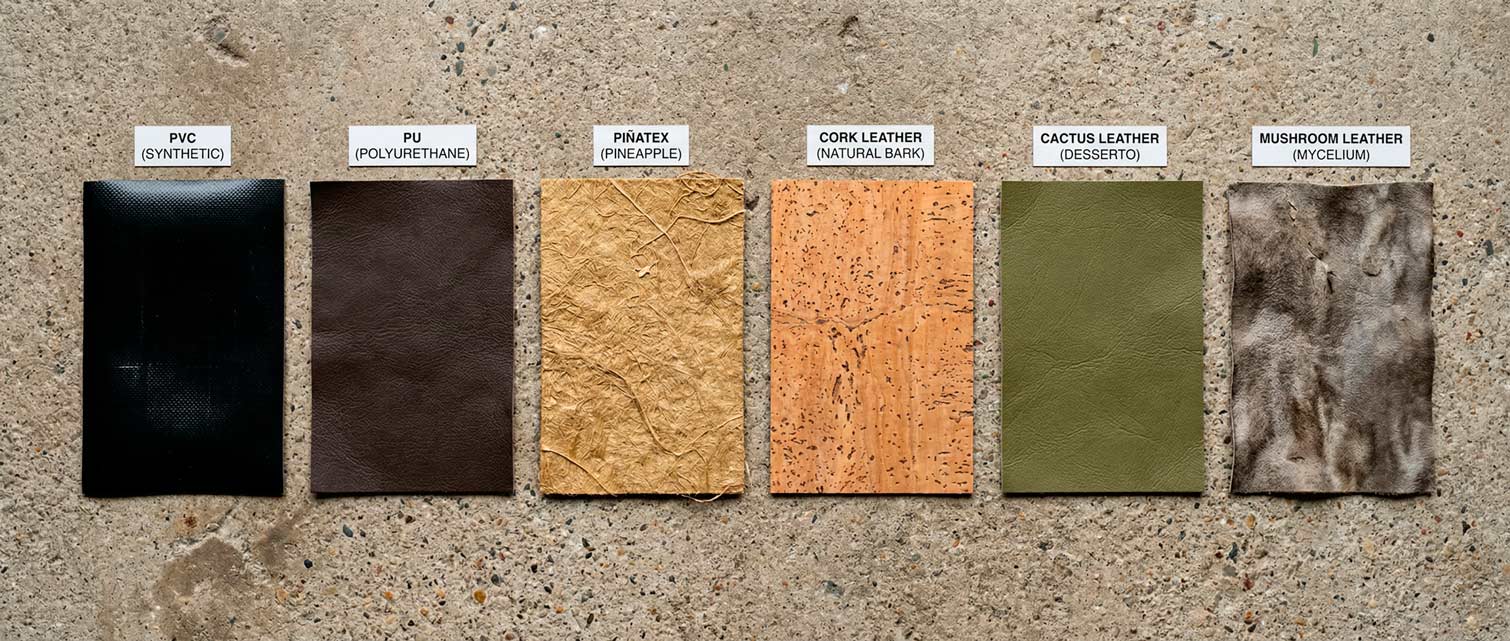
The honest picture: animal leather remains the worst option environmentally and ethically. Among alternatives, plant-based leathers with transparent ingredient disclosure are the better choice over standard PU or PVC, even when they’re not perfect.
Sustainable Bag Materials
For vegan bags, the material conversation overlaps with vegan leather above, plus a few additional options:
- Organic cotton or hemp canvas: durable, washable, low-impact. Waxed versions add water resistance without synthetic coatings; plant-based waxes are preferable to paraffin.
- Recycled polyester and recycled nylon: keep post-consumer plastic out of landfill and use significantly less energy to produce than virgin synthetics. Look for GRS certification to verify the recycled content claim.
- Natural textile linings: a bag with an organic shell and a synthetic lining is a hybrid. For genuinely low-impact bags, the lining and hardware need to be accounted for too.

Caring for Sustainable Accessories
The most sustainable accessory is the one you already own. Proper care extends the lifespan of everything in this category significantly.
Hats and berets: spot-clean wool with cold water and gentle soap rather than machine washing. Heat and agitation cause felting and shrinkage. Store structured hats on a form or stuffed with paper to hold their shape.
Jewelry: store pieces individually to prevent scratching. Keep silver away from humid environments to reduce tarnishing. Recycled metal requires no different care than conventionally sourced metal, it’s the same material.
Vegan bags: wipe down regularly with a damp cloth and mild soap. Avoid heat and direct sunlight, which accelerate degradation in most synthetic and plant-based leathers. Store stuffed with tissue paper to prevent creasing.
Everything: repair before replacing. A cobbler can resole a bag. A jeweller can restring beads, reset stones, and refinish metal. These services exist and are almost always cheaper than buying new.
Sustainable accessories aren’t a separate category from the rest of your wardrobe, they follow the same logic. The piece you choose carefully, wear often, and repair when needed is more sustainable than any material certification. That’s the actual standard.
For the broader picture on sustainable fashion in Canada, see our guides on ethical clothing and sustainable sneakers.