
Most people spend around 90% of their time indoors. The materials in your home, the rug under your feet, the towels in your bathroom, the candle on the shelf, are things you’re in contact with every single day.
We went through the research on what makes home products sustainable, what certifications mean in practice, and where the biggest wins are for Canadian households.
For context: Canadian imports of sustainable home products grew at nearly 8% annually between 2020 and 2025. The demand is clearly moving in this direction, even if the options aren’t always easy to navigate.
Best Sustainable Materials for Your Home
The simplest place to start is materials. Not all natural materials are equal, and not all synthetic ones are automatically bad, but there are some that consistently come out better across the board.
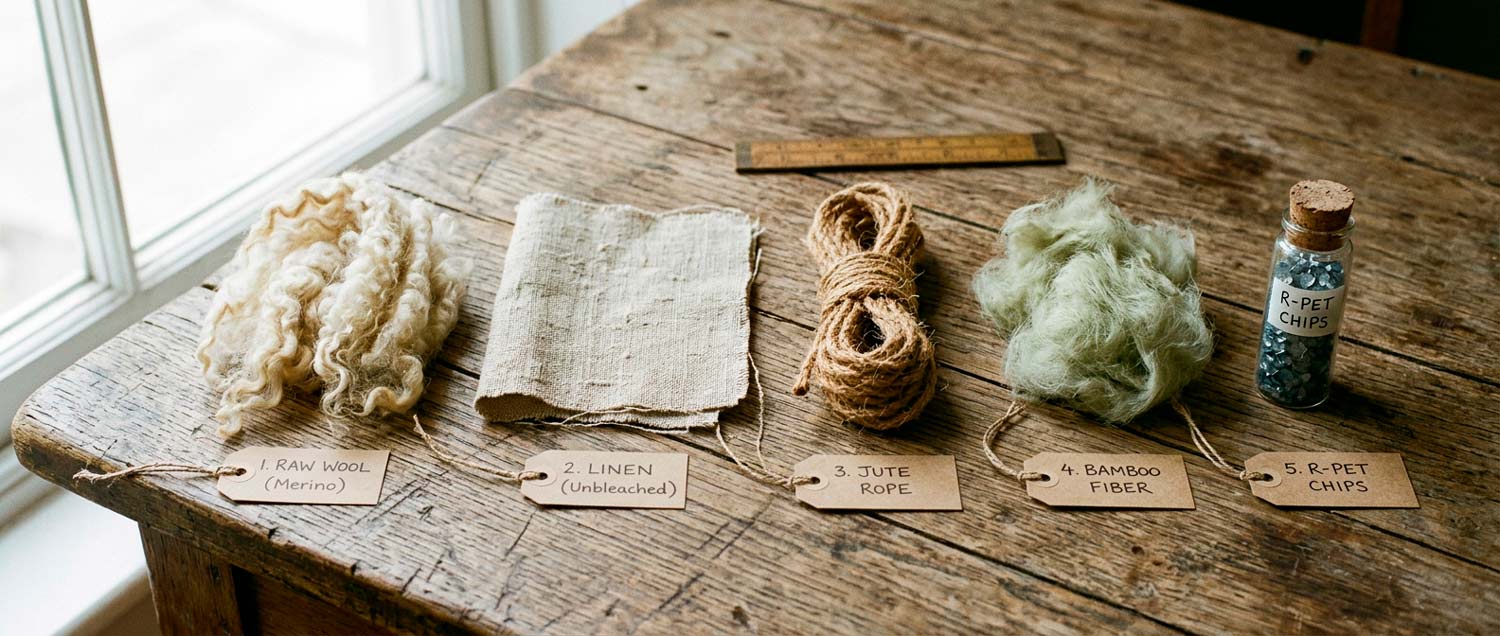
Wool is one of the most durable natural fibres available. Sheep produce it continuously, it’s fully biodegradable, and it regulates temperature well, which is why it works in both rugs and throws year-round. A good wool rug can last decades with basic care.
Linen has been grown for thousands of years and thrives in poor soil with very little water. It’s strong, biodegradable, and gets softer over time rather than wearing out. Good for everything from cushion covers to bath accessories.
Jute is a fast-growing plant that needs minimal water and no pesticides. It’s woven into a strong natural fibre used widely in rugs, baskets, and decorative textiles. It biodegrades completely.
Bamboo grows fast, some species can be harvested in two to three years, and requires little water or pest management. As a textile, it produces a soft, silky material suitable for throws and bath products.
Recycled materials, whether metal, glass, or polyester made from post-consumer plastic, reduce the energy and extraction required to make something new. A textile made from recycled polyester uses roughly 75% less carbon than one made from virgin fibres.
OEKO-TEX for Home Textiles
If you’ve been browsing eco-friendly home decor, you’ve likely noticed the OEKO-TEX label on everything from bedding to curtains. But what does that certification actually confirm?
OEKO-TEX Standard 100 means every component of the product (every thread, dye, button, and lining) has been tested for over 1,000 harmful substances. This includes heavy metals, formaldehyde, pesticide residues, and allergy-inducing colourants. The standard is reviewed and updated annually. For home textiles like bath mats, rugs, and throws, this certification means the product won’t off-gas chemicals into your living space or transfer them to your skin.
MADE IN GREEN by OEKO-TEX goes further. It covers not just the product but the conditions in which it was made – environmental practices at the facility and social standards for workers.
For organic fibre products, GOTS (Global Organic Textile Standard) is the other major certification to know. It requires a minimum of 70% certified organic fibres, with the “organic” label requiring 95% or more. GOTS also covers processing, packaging, and labour conditions. For organic cotton bath products specifically, GOTS is the certification that confirms the cotton was grown and handled without synthetic pesticides or fertilizers.
Natural vs Synthetic Fabrics
The short version: natural fabrics are generally better for indoor air quality, biodegradability, and skin contact. Synthetic fabrics have some advantages in durability and water resistance, but come with trade-offs.
The main concern with synthetics is VOCs (volatile organic compounds), which can off-gas from treated textiles into your indoor air. Studies by the US Environmental Protection Agency have found that VOC levels inside homes are commonly two to five times higher than outdoors, and up to 1,000 times higher in certain conditions. Textiles treated with flame retardants, stain-resistant coatings, or synthetic dyes are common contributors.
Natural fibres like organic cotton, linen, and wool don’t require these treatments to perform well. Wool is naturally flame-resistant. Linen resists bacteria. Organic cotton grown without pesticides starts cleaner before it ever reaches a factory.
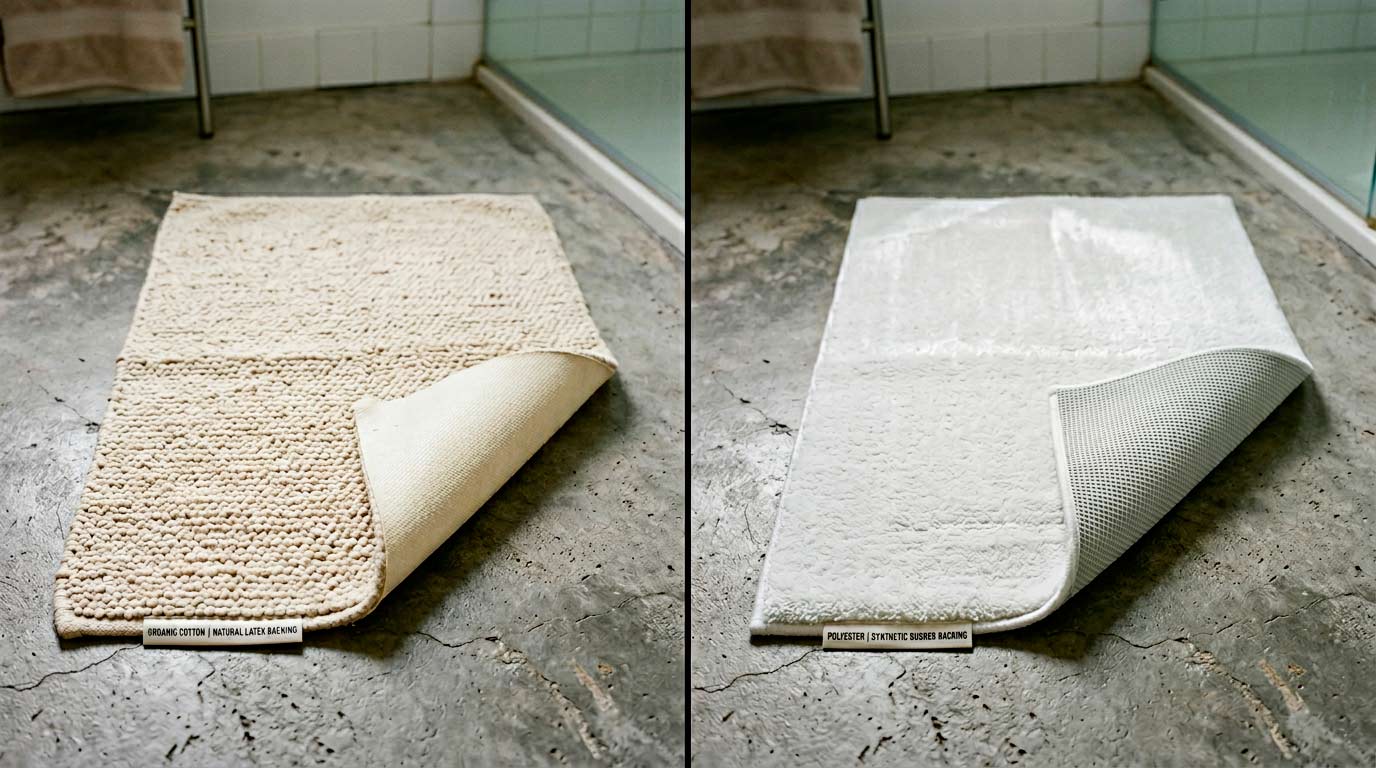
If you’re choosing between two similar products, a synthetic bath mat and an organic cotton one, the organic cotton version is almost always the better call for a space like a bathroom where you’re barefoot, and the air is humid and contained.
Sustainable Bath Mats, Bath Rugs and Body Care in Canada
Bath mats Canada searches are among the highest volume queries in this category, and it’s worth knowing what to look for. Most conventional bath mats are made from synthetic rubber-backed polyester or nylon – functional, but not ideal for a space you use daily.
For organic bath products in Canada, look for bath mats and towels made from organic cotton or bamboo with GOTS or OEKO-TEX Standard 100 certification. These confirm the fibres were grown and processed without harmful chemicals, which matters in a bathroom context – hot showers open pores and increase skin absorption.
Bath rugs in Canada – the distinction from bath mats is mostly size and pile height, but the material considerations are the same. Natural fibre options in cotton, bamboo, or even tufted wool hold up well with regular washing and don’t shed microplastics into your water supply the way synthetic rugs do.
For other organic bath products (soaps, shampoos, body care) look for products that use plant-based ingredients and come in compostable or recyclable packaging. Solid bars typically use significantly less packaging than liquid products in plastic bottles.
Sustainable Rugs and Throws
Rugs are one of the most impactful home purchases from a sustainability standpoint: they’re large, they sit on the floor where children and pets spend time, and they last years if you choose well.
Natural fibre rugs (wool, jute, cotton, sisal) are biodegradable and don’t require synthetic treatments to function. Wool in particular is worth the investment: it’s naturally resistant to stains and moisture, regulates temperature, and a well-made wool rug gets better with age.
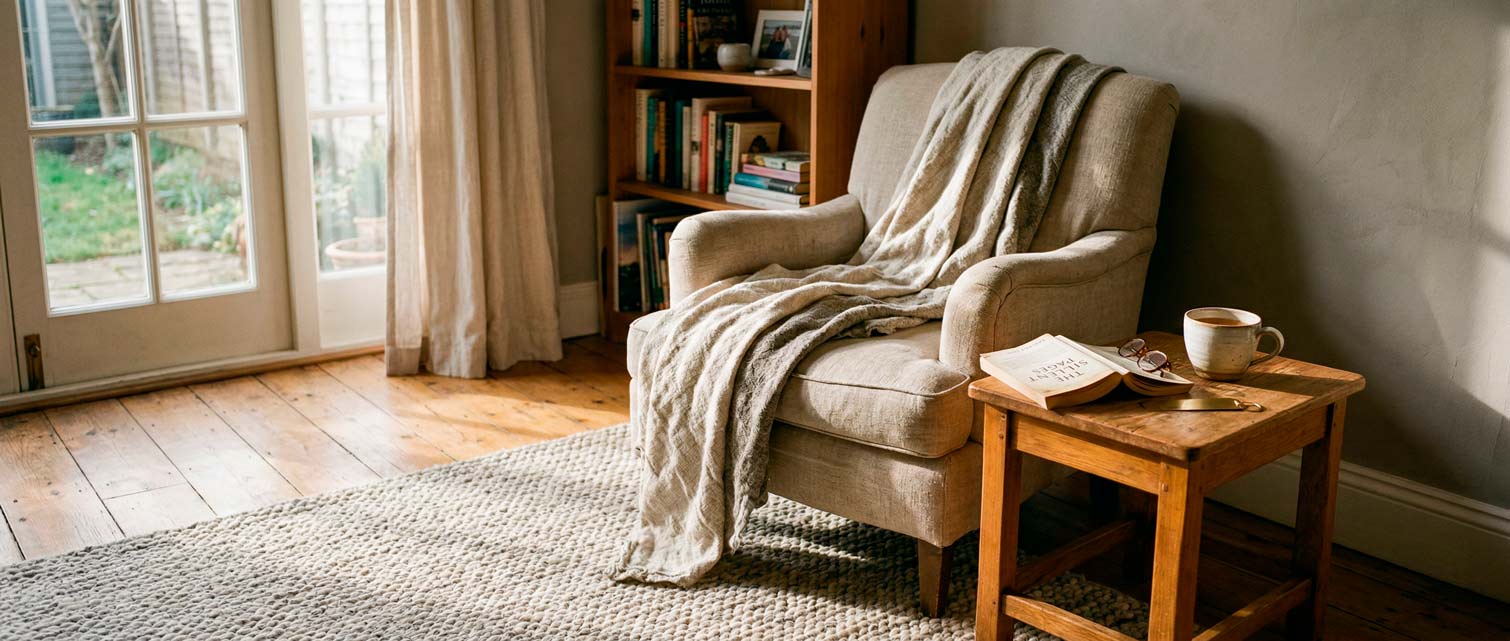
Watch the rug backing: this is where many otherwise natural rugs introduce synthetic materials. Natural latex backing is the best option. Synthetic rubber or PVC backings can off-gas over time.
For throws, wool and linen are both excellent choices. Recycled cashmere and recycled wool throws are also worth considering: they give a second life to quality fibres and typically come with a lower carbon footprint than new production.
GOTS or OEKO-TEX certification on any rug or throw confirms it’s been tested across all components, not just the visible surface.
Non-Toxic Home Fragrances – Alternatives to Air Fresheners and Candles
Conventional air fresheners, synthetic candles, and plug-in diffusers are among the worst offenders for indoor air quality. Most use synthetic fragrance compounds that release VOCs continuously.
The simplest non-toxic home fragrances don’t come in a bottle. A Reddit thread on zero-waste fragrance alternatives summed it up well: “Put some cinnamon sticks and vanilla in a pot with water on the stove and give it a simmer” – cheap, effective, and nothing synthetic involved.
Other practical options:
A simmer pot with citrus peels, cinnamon, cloves, or fresh herbs produces a clean, natural scent throughout a room. Citrus peels can be dried and kept for this purpose rather than composted immediately.
Essential oil diffusers with pure oils (not synthetic fragrance oils) are a reasonable option though worth noting that some oils are harmful to pets, and more isn’t better. A few drops go further than expected.
Beeswax candles burn cleaner than paraffin and produce no synthetic scent by default. Natural scent comes from the wax itself.
Growing herbs (mint, rosemary, lavender) on a windowsill adds light fragrance while also being useful in other ways.
The 3Rs Applied to Home Decor
Canada’s approach to waste management places responsibility across federal, provincial, and municipal governments, with individual households playing a key role in the 3Rs: reduce, reuse, recycle. In practice for home decor, that means:
- Buying less, buying better. A $60 linen cushion cover that lasts ten years creates less waste than three $20 synthetic ones that pill and fade. Timeless, durable pieces reduce the rate at which things end up in landfill.
- Choosing recyclable or compostable packaging. When buying organic bath products or home textiles online, look for brands that ship in cardboard or paper rather than poly mailers and bubble wrap.
- Giving things a second life before discarding. Old towels become cleaning rags. Worn throws become pet bedding. Most household textiles have a second use before they’re at the end of life.
- Checking what’s actually recyclable in your municipality. Canadian municipalities vary significantly in what they accept. Soft plastics, for instance, aren’t accepted curbside in most areas, but have drop-off programs in many cities.
The biggest sustainable home decision isn’t which bath mat to buy. It’s how long you keep it. Natural fibre products that are cared for properly last years longer than synthetic alternatives, which means less waste and lower long-term cost. A wool rug or organic cotton bath mat that lasts a decade is more sustainable than three cheaper replacements made from recycled polyester.
For more on sustainable materials and certifications, see our article on ethical clothing and sustainable accessories.